
Suffolk City Wanted Notices
Start with the City's own Suffolk's Most Wanted archive. It publishes the official notices. Most issues arrive as monthly PDF files, updated on a fairly regular rhythm. That makes the archive a solid awareness tool. It is not an all-warrants list, though, or a real-time tracker of everyone law enforcement is seeking. Always open the current archive item rather than trusting an older PDF or a copy floating around elsewhere.
One recent issue showed nine entries. Each carried a name, a last-known address, and alleged charges. Those fields can shift between issues. Some entries include photographs, though not every issue clearly carries them. Treat the archive as a tip route and nothing more. It cannot confirm a live warrant or current wanted status. The official Most Wanted archive remains the standing source for each new notice.
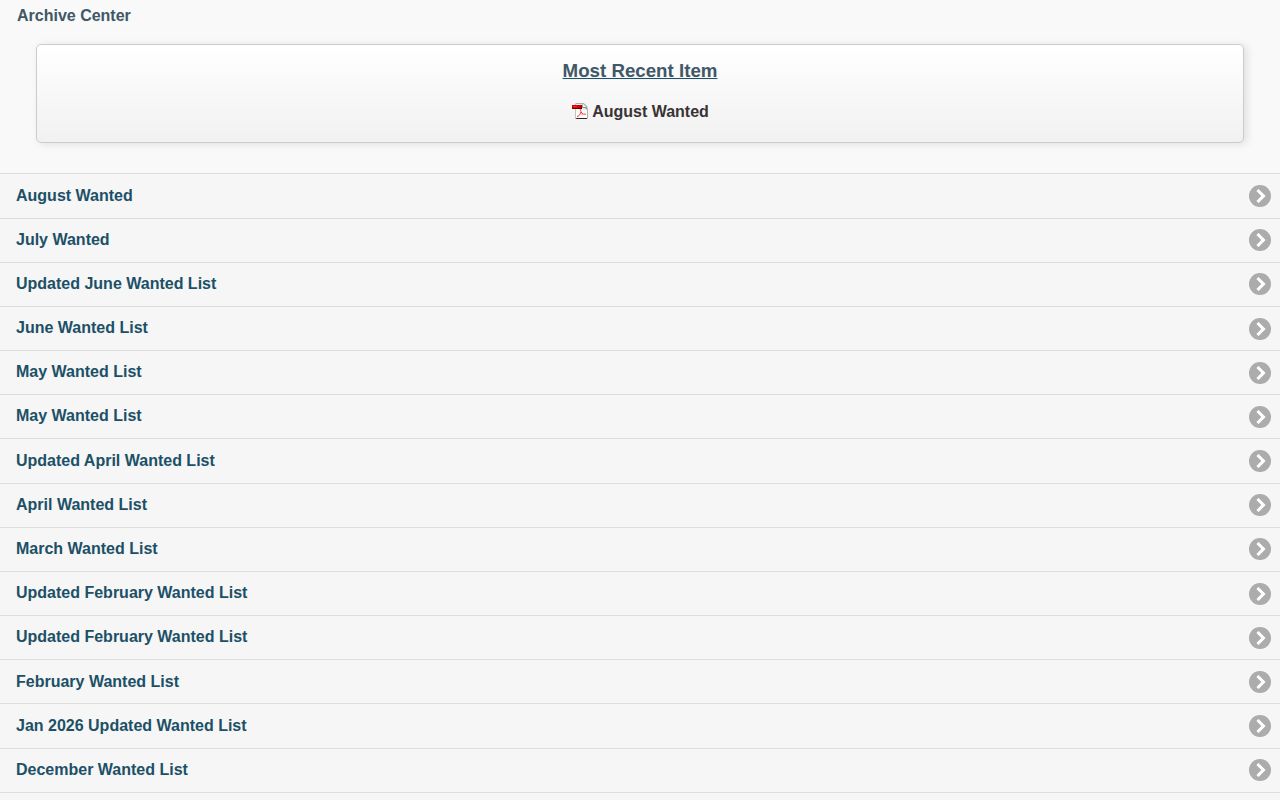
The archive is built for tips, not for tracking. A notice may name a fugitive, show a photo, and list a charge, yet the next issue might carry none of those details. There is no promise of a full warrant list either. Treat each entry as a starting point rather than a complete file.
This collection works differently from a current-custody arrest roster. Expect no status filter, no bond details, no service history, and no court docket. Even a familiar name needs separate confirmation through official channels. And if you do recognize someone, do not go looking for that person or try to make contact. Call the tip line instead. Share only what you know safely, and let law enforcement decide what it means.
Safety first: Never approach, contact, track, or try to detain anyone named in a wanted notice. Report information to Suffolk Crime Line, Police, or emergency services as appropriate.
A wanted notice is not a court file. It names a person the police want to find, nothing more. For anything that follows, the disposition included, court records are the source to check, not a PDF.
How Suffolk City Wanted Entries Work
A Most Wanted entry is a narrow notice, not a case file. Its whole purpose is helping the public recognize details that might matter to investigators. So read each one with care. A last-known address is history, not a current location. A missing name proves nothing about warrant status. An empty search result should never be treated as clearance. The fields described here reflect what the City's published material has shown. The official archive is the place to inspect the current notice.
| Observed item | What it can indicate |
|---|---|
| Name | The identity used in that public notice, subject to later verification. |
| Last-known address | Context from the notice, not a current location or direction to locate someone. |
| Alleged charges | Accusations reported by the notice, not a court outcome. |
| Issue date or archive placement | When a public notice was posted or filed, not a guarantee of current warrant validity. |
The table is a reference, not a license to investigate anyone. Have information that may help? Send it through the official tip routes. Anyone with a question about their own legal standing should reach the Warrant Clerk, a court, or a lawyer rather than lean on an entry alone.
Suffolk City Crime Line Tips
Suffolk Crime Line is the City's official channel for anonymous tips about wanted subjects. It passes information along. It does not confirm warrants, custody status, or court records. Tips go in by phone, through the TipSoft web or mobile route, or by text message. For an immediate emergency, call emergency services instead.
Suffolk Crime Line
Phone: 1-888-562-5887, then option 5
Text: Send CRIMES to 274637 and include the keyword SPDVATIP
Online: Use the TipSoft web or mobile form linked from the official Crime Line page
City policy: Tips stay anonymous and can pay up to $1,000
The official Crime Line page lays out the City's anonymous tip options. It is not a warrant search or a custody lookup.
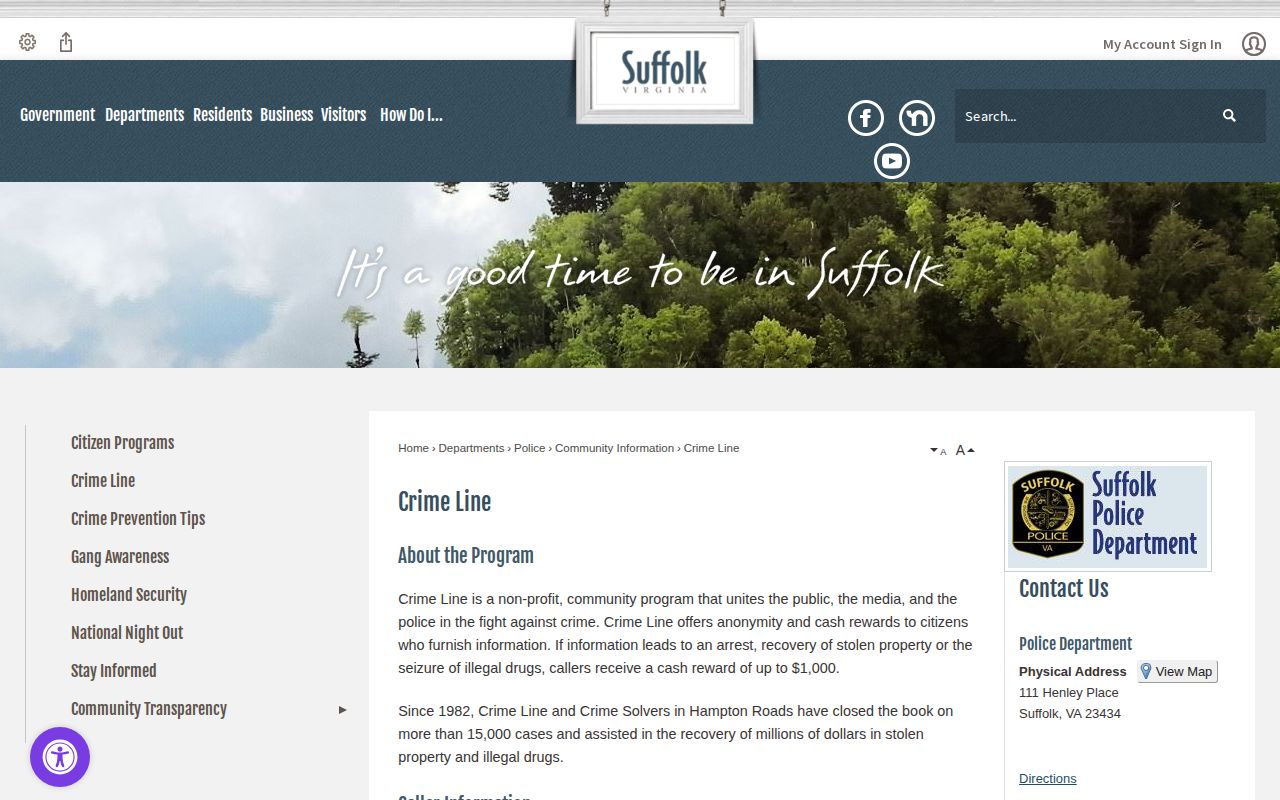
These channels exist for one job. They pass along information safely. They do not create record requests, confirm warrants, or stand in for emergency services.
Share only what you can share safely. Never follow a person, arrange a meeting, or attempt a detention. Crime Line can route a tip. It cannot tell you whether a specific warrant is active. When a situation demands an immediate response, Police and emergency services are the right contacts.
Confirm Suffolk City Warrants
Suffolk does not run a public warrant-search portal you can check yourself. So how do you ask about an outstanding warrant or summons? The City's Magistrate's Office page points to Suffolk Police at 757-514-7922, listed in the Police directory as the Warrant Clerk. Call that number for a warrant question. Anything else, such as a social post or a court-page search that comes up empty, cannot tell you whether a warrant exists.
Inmate questions use a different number. The same Magistrate page lists Western Tidewater Regional Jail Booking at 757-539-3119, extension 543. Booking staff answer custody and booking questions only. The official Magistrate's Office instruction keeps those contacts separate rather than pointing to a searchable warrant screen. That split matters. A warrant, an arrest, jail custody, and a court case are four different records with four different custodians.
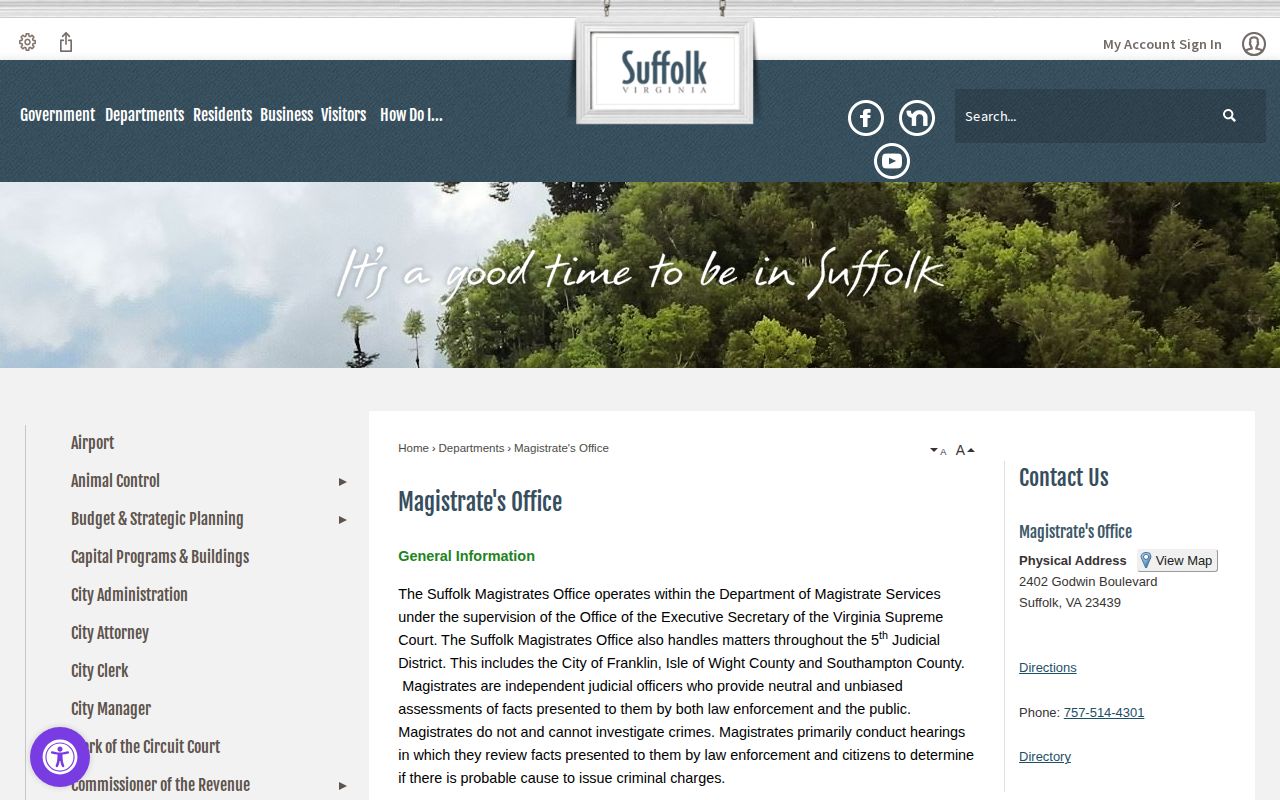
That separation sends each question to the right office, so a custody inquiry never gets mistaken for a warrant confirmation.
- For an outstanding-warrant or summons question, contact the Suffolk Police Warrant Clerk at the number the Magistrate’s Office provides.
- For a current custody or booking question, contact WTRJ Booking through its published extension or use the official jail channel.
- For later case activity or a disposition, use the appropriate court record system or contact the court. Counsel can advise an affected person about the proper next step.
A warrant is an authorization issued through the legal process. No archive of public records replaces individual confirmation. Never dodge contact or enforcement because of what a search turns up, or fails to turn up.
Suffolk City Archive or Warrant Confirmation
Suffolk keeps its public wanted notices and its warrant confirmations apart on purpose. The Most Wanted archive comes out roughly monthly and makes selected notices visible so the public can stay aware and send tips. The Warrant Clerk handles questions about a specific outstanding warrant or summons. One source builds awareness; the other answers a person-specific status question.
That gap explains why a name in a PDF cannot prove a warrant is live, and why a name missing from a PDF is never an all-clear. Public materials change before an archive file gets replaced. Not every warrant belongs on a public awareness notice, either. For court-related questions, turn to the court and counsel after confirmation, and keep booking questions with WTRJ.
The split also guards against a common mix-up. A public notice shows what the City chose to publish. A warrant confirmation concerns a specific legal status. WTRJ records cover regional adult custody and booking. Court records track later case activity. Reading one source never turns it into another kind of record, even when all of them describe the same person.
Suffolk City Warrant Information Channels
Suffolk has no official Sheriff or Western Tidewater Regional Jail lookup app. Skip third-party stand-ins that promise warrant checks. The City's Police Stay Informed page points to two channels for current crime news: Police-to-Citizen, or P2C, and the department's social media. Neither one replaces the Warrant Clerk. If you need a warrant confirmed, that office is still the right call.
The P2C Recent Arrests module covers police arrest events. The Police Media Releases archive posts selected announcements, sometimes including wanted-subject updates. It is not a full bookings log. It is not a public warrant database either. Crime Line handles anonymous tips, and the City's emergency communications channel sends public-safety alerts rather than booking, release, or warrant notices.
The official Suffolk Police Media Releases archive is the selected-release source shown below.
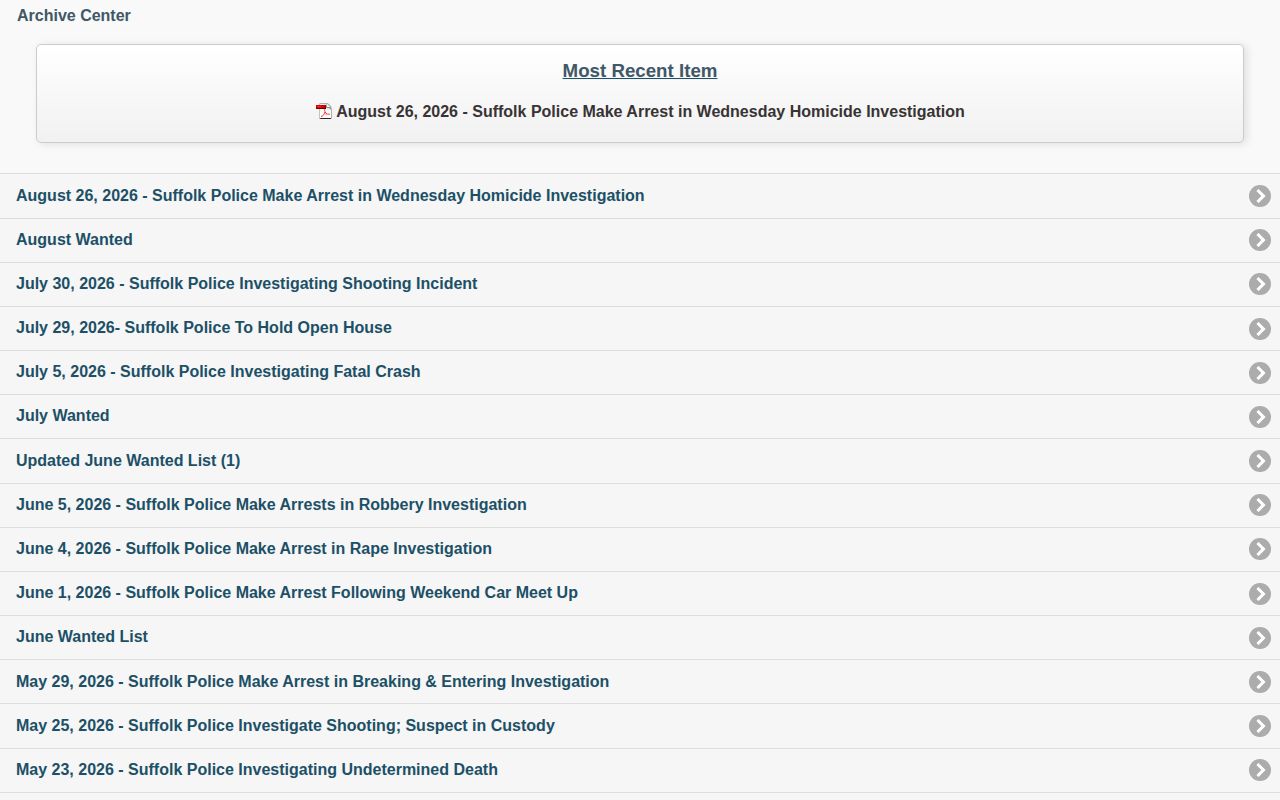
A selected release can announce a single event, but the archive is not a complete warrant database or a full list of wanted people.
Each channel answers a narrow question. WTRJ handles regional custody and booking. P2C covers Police arrest information. Selected releases give individual announcements, Crime Line receives tips, emergency alerts address public safety, and the Warrant Clerk confirms warrants. None of them replaces the rest. When an official source is unclear or down, contact its custodian instead of trusting a third-party post.
Police social posts and media releases may explain one event, yet neither is a standing list of every arrest or every wanted person. A general emergency-alert subscription will not track jail admissions, transfers, or releases either. Virginia Jail VINE is a separate notification service, and WTRJ participation in it was not verified, so check the official service before relying on it for this facility.
Suffolk City Court Status After Notice
When a wanted notice leads to an arrest, the record can travel through several systems. A Police arrest-event entry and a WTRJ custody entry answer different questions. Neither shows the final case result. Someone can leave the regional-jail roster after release while the court case continues. Court disposition simply means the later outcome the court records, such as a dismissal, a reduction, a conviction, or some other resolution.
For later case status, the Virginia Case Information service and the relevant Suffolk court are the right official routes. Keep the safety boundary in place at every stage. Report information through official channels, and leave contact or detention to law enforcement.